
Doctoral student in Religious Studies/Theology
Umeå University, Faculty of Arts and Humanities
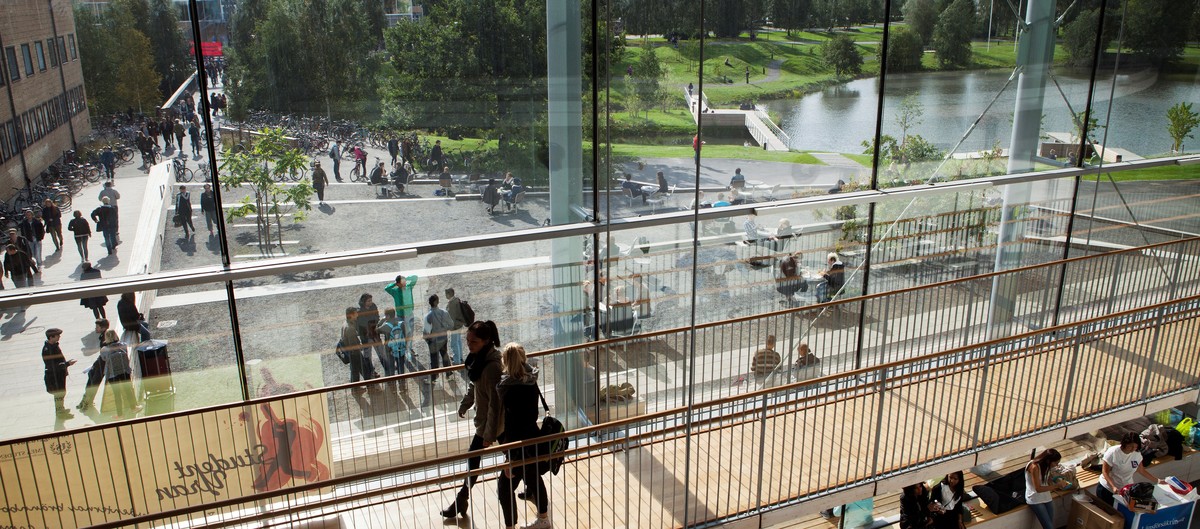
Umeå University is one of Sweden’s largest higher education institutions with over 37,000 students and about 4,700 employees. The University offers a diversity of high-quality education and world-leading research in several fields. Notably, the groundbreaking discovery of the CRISPR-Cas9 gene-editing tool, which was awarded the Nobel Prize in Chemistry, was made here. At Umeå University, everything is close. Our cohesive campuses make it easy to meet, work together and exchange knowledge, which promotes a dynamic and open culture.
The ongoing societal transformation and large green investments in northern Sweden create enormous opportunities and complex challenges. For Umeå University, conducting research about – and in the middle of – a society in transition is key. We also take pride in delivering education to enable regions to expand quickly and sustainably. In fact, the future is made here.
Are you interested in learning more? Read about Umeå university as a workplace
The Faculty of Arts and Humanities at Umeå University develops arts and humanities and invests in future Areas of Excellence.
The Department of Historical, Philosophical and Religious Studies invites applications for the doctoral training programme in Religious Studies/Theology.
The Department of Historical, Philosophical and Religious Studies belongs to Umeå University's Faculty of Arts and Humanities and has about 110 employees. The department gathers researchers, teachers, and students in the fields of Archaeology, Environmental Archaeology, Philosophy, History, History and Education, History of Science and Ideas, Religious Studies, and Theology under the same roof.
In the field of religious studies and theology, programs and degrees are offered at the undergraduate, master’s, and doctoral levels. These programs provide an advanced understanding of religion as a social, cultural, and historical phenomenon, as well as of theological traditions and systems of thought. Research within the field spans a wide range of subdisciplines, including the history of religions, psychology of religion, sociology of religion, religious education, biblical studies, church history, practical theology, and systematic theology.
The doctoral programme in the Study of Religions comprises five specializations:
History of Religion focuses on the study of religions and religious expressions in both historical and contemporary contexts. Areas of inquiry include narratives, ideas, rituals, artistic expressions, organizations, and social structures. The specialization centers on human beings as cultural agents and employs a broad range of methods—such as historical, textual-analytical, linguistic, ethnographic, and other scholarly approaches—depending on the specific research object.
Social Sciences of Religion examines the functions and expressions of religion at the individual, group, and societal levels. Drawing on psychological, sociological, and educational theories and methods, this specialization analyzes religious experiences and practices, interactions between individuals and groups, and the organization, roles, and significance of religious communities. It also investigates how religious knowledge, as well as knowledge about religion, is transmitted, transformed, and negotiated across different contexts.
Biblical Studies focuses on biblical texts and related literature, with particular attention to their historical origins, interpretation, and reception over time. Emphasis is placed on the social and cultural contexts of both authors and readers, as well as on rituals, religious practices, and various forms of social organization. The specialization also highlights the processes and mechanisms through which certain texts are attributed authority, meaning, and legitimacy as “biblical.”
Systematic Theology studies Christian beliefs and doctrines, focusing on their content, interpretation, and internal relationships. The specialization also addresses the sources underpinning these doctrines and their relationships to broader cultural and intellectual traditions, including contemporary science, philosophy, and public discourse. Philosophy of religion and theological ethics form integral components of this field.
Historical and Practical Theology explores the historical forms and contents of church life in relation to changing social structures across different periods. The specialization includes the study of ecclesiological and liturgical issues from both historical and contemporary perspectives, with particular attention to the dynamic interplay between theological theory and religious practice in church and society.
Applications are invited for doctoral studies within either of the five specializations.
Qualifications
General requirements
To be admitted to studies at the third-cycle level, i.e. doctoral education, the applicant must meet both general and specific eligibility requirements. General requirements: a Master’s or equivalent degree in a relevant field, having completed course requirements worth at least 240 credits, of which at least 60 credits must be at second-cycle (Master’s) level, or in some other way – either in Sweden or abroad – having acquired equivalent knowledge.
Specific requirements
In order to meet the specific eligibility requirements for admission to Religious Studies at third-cycle level, the applicant must have completed at least 30 credits at second-cycle level, with an independent project worth at least 15 credits in Religious Studies/Theology. Students who have acquired equivalent knowledge in some other way, either within Sweden or abroad, may be admitted for third-cycle studies after assessment.
Assessment criteria
Applicants are ranked with reference to their capacity to benefit from and complete the programme. The assessment is based primarily on prior study results, with particular consideration given to essays, and the quality of the research plan and its relevance for the subject area. The assessment is also based on references and interviews, and additional possible evaluations of the main candidates.
The degree must be completed at the latest at the end of the application period.
Terms of employment
Doctoral students will mainly devote themselves to their own doctoral studies. Employment as a doctoral student will be for the time deemed necessary for the completion of doctoral studies at a normal rate of study, which corresponds to a full-time position for four years. An initial contract of twelve months is extended with up to two years at a time provided that the individual study plan is followed. A doctoral student may, to a limited extent, also work with teaching and administration up to a maximum of 20 percent of a full-time position. The period of employment may thus be extended up to a maximum of five years. The entry level salary is SEK 30,900 and rises in three steps to SEK 35,600.
Additional information
Doctoral students are affiliated with a research school, normally the Faculty of Arts and Humanities Doctoral College. The studies are coordinated with the doctoral training programme at the relevant department. The doctoral studies begin at the start of the autumn semester, 31 August 2026. The place of work is Umeå University. The doctoral students are expected to contribute actively to the research environment.
According to The Higher Education Ordinance, Chapter 12, Section 2, a decision of appointment for a doctoral student position may not be appealed.
The doctoral student is admitted to studies at the third-cycle level in Religious Studies/Theology at Umeå University. In case a residence permit is required for the stay in Sweden, the university reserves the right to revoke the admission if the doctoral student is not granted a residence permit, or - if the date for the start of studies has been decided - if the doctoral student cannot present a valid residence permit before the start date of the studies. The latest possible start date is 26-08-31.
Application
An application must contain:
- A degree certificate, transcript from the Ladok student registry, and/or equivalent attested copies of your academic transcripts proving that general and specific entry requirements are met.
- Curriculum vitae, including name and contact information of two reference persons.
- Copies of relevant Bachelor’s and Master’s theses and other relevant publications.
- A letter that states your motivation for undertaking doctoral studies, and that specifies what expertise at the department is needed for carrying out your research.
- Research plan – should normally not exceed 30,000 characters including spaces – that contains a description of the proposed:
- purpose and research problem;
- previous research;
- implementation, that is, method, material and theory;
- relevance; and
- time plan.
Your application must be registered in Umeå University’s e-recruitment system Varbi no later than 6 March 2026.
Please note: the Swedish version is the official version of this advertisement. In the case of any differences in information between this and the official version, it is the official version that is the legally correct version of the advertisement for these doctoral student positions.
We look forward to receiving your application!
| Type of employment | Temporary position |
|---|---|
| Contract type | Full time |
| First day of employment | 2026-08-31 |
| Salary | Monthly salary |
| Number of positions | 1 |
| Full-time equivalent | 100% |
| City | Umeå |
| County | Västerbottens län |
| Country | Sweden |
| Reference number | AN 2.2.1-1379-25 |
| Contact |
|
| Union representative |
|
| Published | 01.Dec.2025 |
| Last application date | 06.Mar.2026 |